Rethinking Metal Buildings: Elevating Performance Through Design
Pre-engineered metal buildings (PEMBs) are often approached as purely utilitarian—driven by speed, cost efficiency, and function. While those factors are important, they don’t have to come at the expense of thoughtful design.
With the right approach, metal buildings can deliver both high performance and a strong architectural presence.
At Slate Architecture, we see PEMBs as an opportunity—not a limitation.
Design Beyond the System
The core structure of a pre-engineered building is inherently efficient. The opportunity lies in how you build upon that system.
Strategic decisions around the building envelope, material profiles, and detailing can significantly elevate the overall expression. Insulated metal panels, for example, provide both thermal performance and a clean, contemporary aesthetic when used intentionally. Pairing these with standing seam roofing systems creates a cohesive, durable exterior that performs over time.
More importantly, these moves are not just aesthetic—they contribute directly to long-term building performance and maintenance.
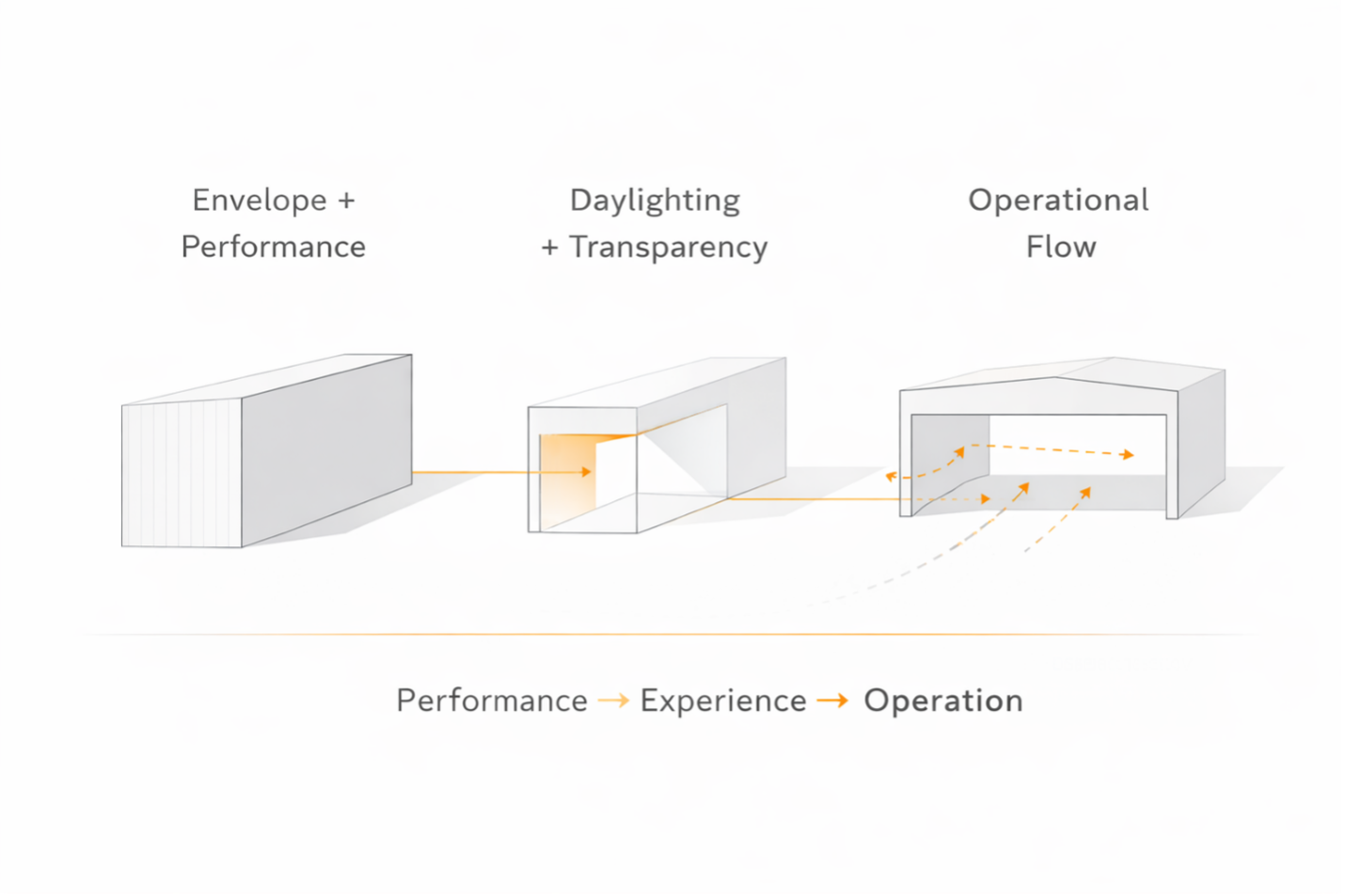
Daylighting and Human Experience
Industrial and maintenance facilities are often designed from the inside out, with limited attention given to daylight and occupant experience.
We believe these environments should support the people working in them just as much as the operations they house.
Introducing large glazed openings at office and administrative areas, along with thoughtful placement of windows and transitions, helps bring natural light deep into the building. This creates a more comfortable, productive environment without compromising efficiency.
Clarity in Operations
Function is still critical—and in many cases, it’s the primary driver.
Successful metal building design starts with a clear understanding of operations:
- Vehicle circulation and maneuverability
- Equipment access and clear spans
- Integration of cranes and maintenance zones
- Separation—and connection—between office and shop
When these elements are resolved early and clearly, the building becomes more intuitive to use and more efficient over time.
Case Study: Papillion Sanitation Headquarters
Silver Award – American Buildings Excellence in Design
The Papillion Sanitation Headquarters in Bellevue, Nebraska is a strong example of this approach in practice.
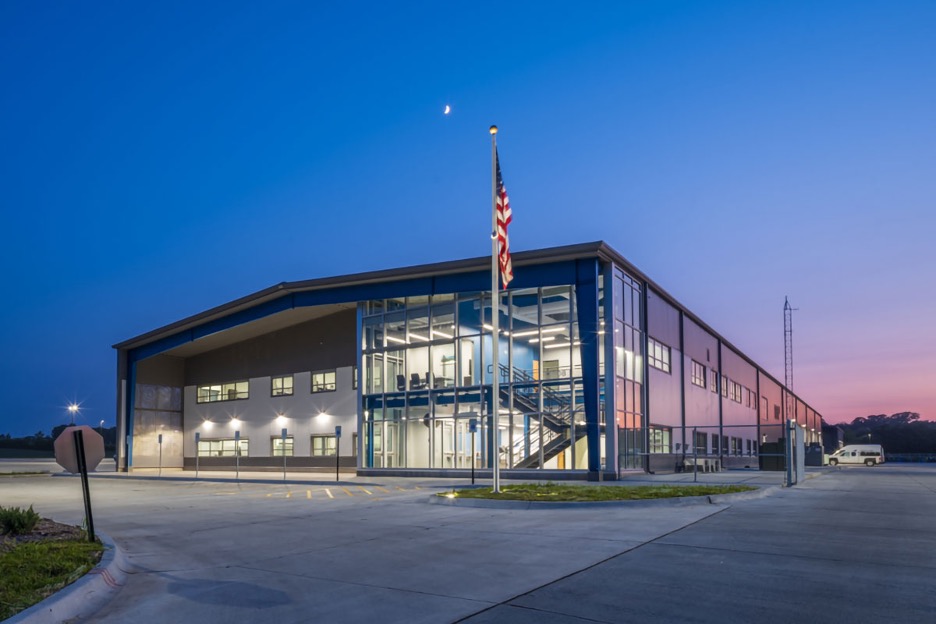
Spanning over 30,000 square feet, the facility was designed to support large-scale maintenance operations, including multiple service bays, overhead crane systems, and drive-through circulation.
At the same time, the project focuses on elevating both user experience and architectural presence:
- A refined exterior using insulated metal panels
- A standing seam roof system for durability and performance
- An articulated entry with exposed structural elements
- A glazed office zone that brings daylight into the workspace
The result is a facility that balances durability, efficiency, and a clean, modern identity—while still delivering on the core benefits of a pre-engineered system.
The project was recognized with a Silver Award from American Buildings, reinforcing the impact that thoughtful design can have—even within highly utilitarian building types.
Looking Forward
Metal buildings are not just a cost-driven solution—they are a platform for smart, efficient, and well-designed architecture.
As expectations for industrial and operational spaces continue to evolve, so should the way we design them.
The opportunity is not to move away from these systems—but to use them more intentionally.
What Clients Say
Fatal error: Uncaught Google\Service\Exception: { "error": { "code": 429, "message": "Quota exceeded for quota metric 'Read requests' and limit 'Read requests per minute per user' of service 'sheets.googleapis.com' for consumer 'project_number:790015134435'.", "errors": [ { "message": "Quota exceeded for quota metric 'Read requests' and limit 'Read requests per minute per user' of service 'sheets.googleapis.com' for consumer 'project_number:790015134435'.", "domain": "global", "reason": "rateLimitExceeded" } ], "status": "RESOURCE_EXHAUSTED", "details": [ { "@type": "type.googleapis.com/google.rpc.ErrorInfo", "reason": "RATE_LIMIT_EXCEEDED", "domain": "googleapis.com", "metadata": { "quota_limit_value": "60", "window_start_time": "1792623502", "service": "sheets.googleapis.com", "quota_limit": "ReadRequestsPerMinutePerUser", "consumer": "projects/790015134435", "qu in /home/forge/www.slatearchitecture.com/public/vendor/google/apiclient/src/Http/REST.php on line 128